

Before we begin: The Settle is this same story, told slower, longer, made for falling asleep to rather than following.
It is built for the nights your head will not stop talking, the same conversation on repeat, long after the room has gone quiet. $6.99 a month, or $59.99 a year.
One subscription. No streaks, no ads, no catch. Press play, and let the day settle.
Prince Freddie had a finely tuned sense of time. The light shifted from gold to copper to the deep orange that meant the sun was preparing to leave. The tide pools began to cool at a certain hour. The first star arrived at an exact moment, usually just to the left of the old lighthouse.
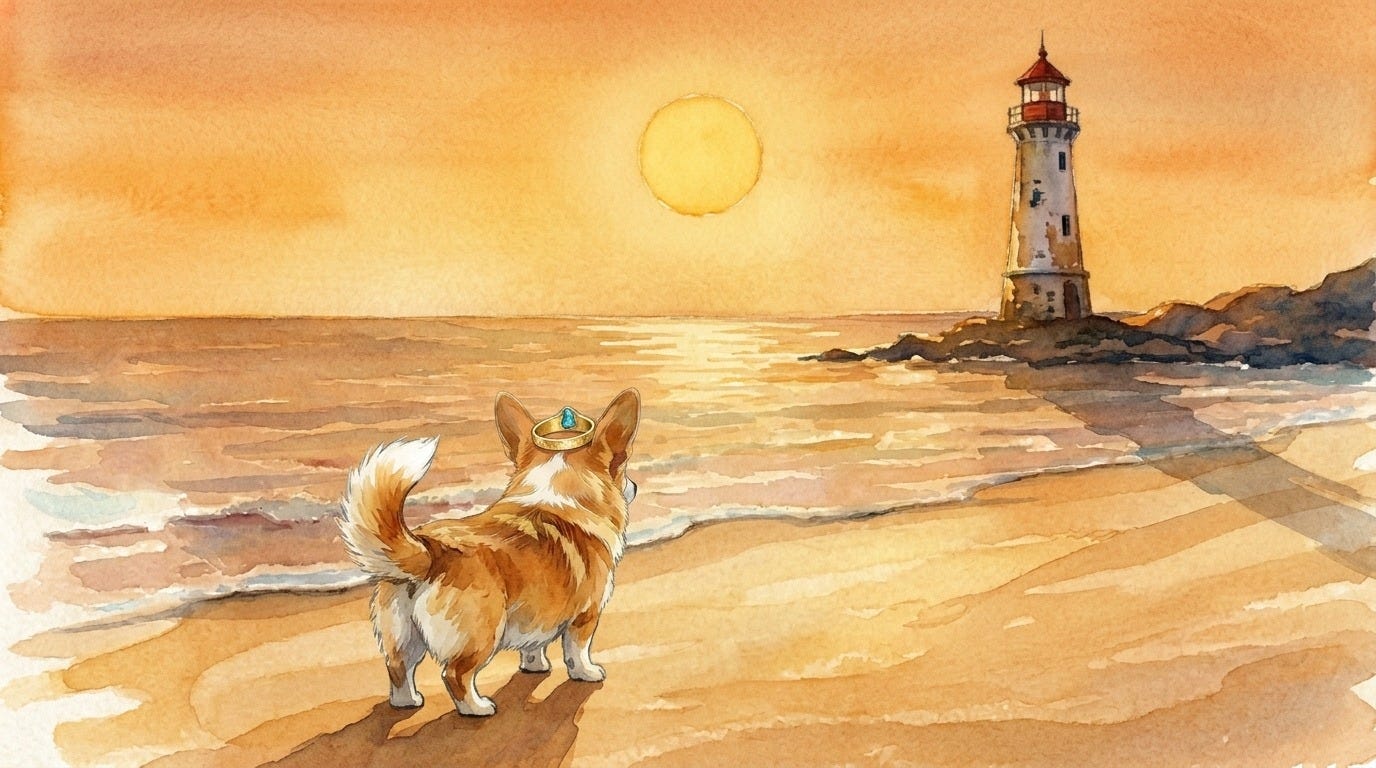
This evening, something was different.
Freddie stopped on the shore and looked west. The sun was still there. Not setting. Not moving toward the horizon. She hung above the water like a visitor considering where to sit.
The beach held its amber colour. It should have been shifting to grey and silver. Instead the light lingered. The shadows stretched longer than usual. The tide pool creatures waited under their rocks because they had expected darkness.
Freddie’s ears went forward.
He walked to the far end of the beach, past the southern rock where the fisherman sometimes sat. He passed the place where Pedro had built his new nest in the cliff grass. The sun seemed to sink a little as he watched, then stopped. She had tried to set and then thought better of it.
“Buenas tardes,” Freddie said softly.
The sun said nothing, which was fair, because she was a very large star and he was a corgi. But Freddie had spoken to enough extraordinary things to know that being heard and being said were not always the same transaction.
“You’ve missed the signal,” he said. “The colours are all wrong. The tide pools have been waiting.”
Something shifted. The light changed quality, slightly, the way it does in the last moment before a decision is made.
Freddie sat down on the warm sand. He was quite good at waiting.
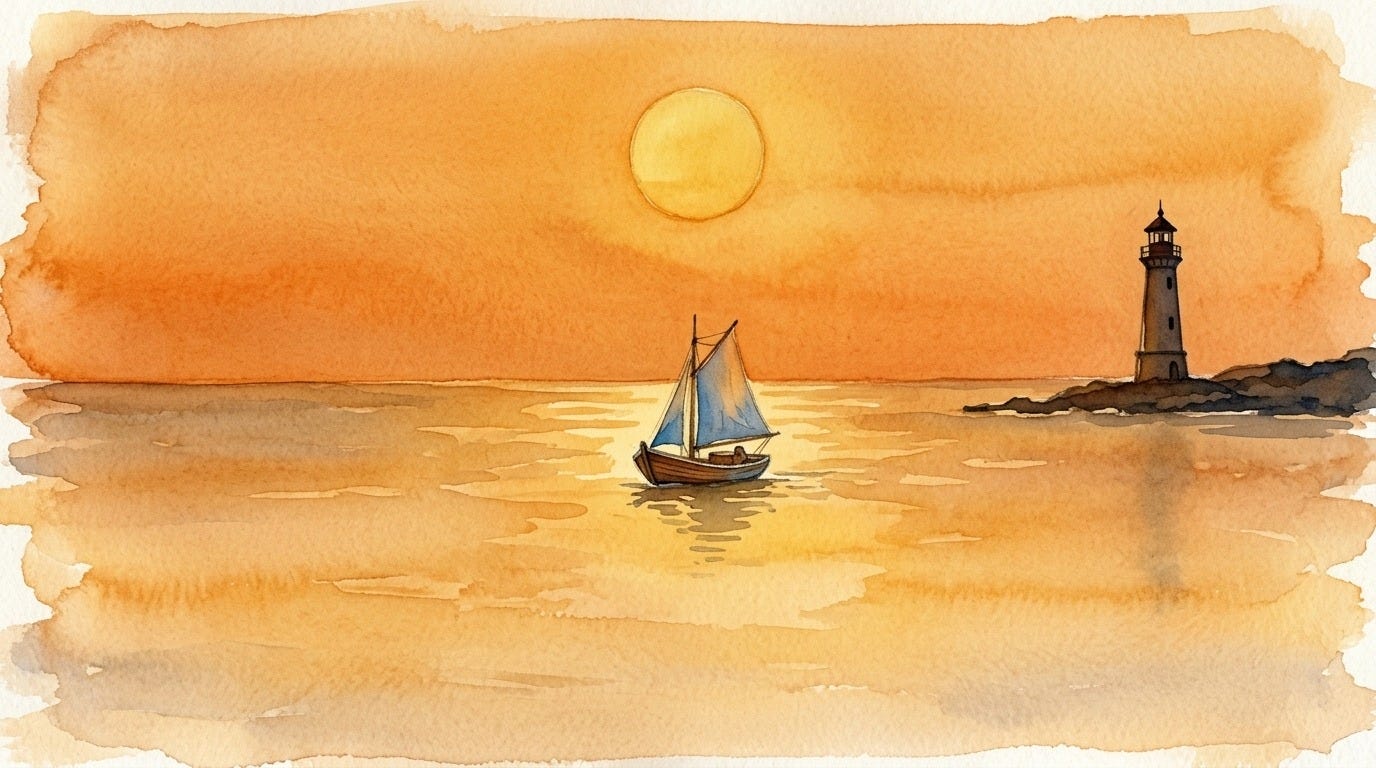
“I was watching the boats,” the sun said finally. The light softened as she spoke. “The way they move. The small ones especially. One of them had a blue sail. I’ve seen it every evening for years. I never quite noticed the blue properly before.”
Freddie’s tail moved once. He understood this. He had once spent an entire morning watching the way foam moved across a flat rock and had not meant to at all.
“The difficulty,” he said, “is that the moon is waiting.”
A pause.
“She’s very patient,” Freddie added, “but she has been standing at the edge of the sky since half past seven. She has nowhere to go. The stars are also waiting. About forty of them, by my count, on the eastern side. They have their places arranged already. They can’t come out while you’re still here.”
The light shifted again, and then was still.
“And the tide pools,” Freddie continued, “do something quite particular in proper darkness. The small creatures come out. I’ve only seen it twice. It takes a very dark sky. You have been very bright this evening.”
The sun moved, finally. She descended steadily. The orange deepened into something extraordinary. Red and rose and the last warmth of the day went into the sand. It went into the stone walls of the village and the white sides of the boats in the harbour. It lasted longer than usual. Freddie stayed very still and watched.
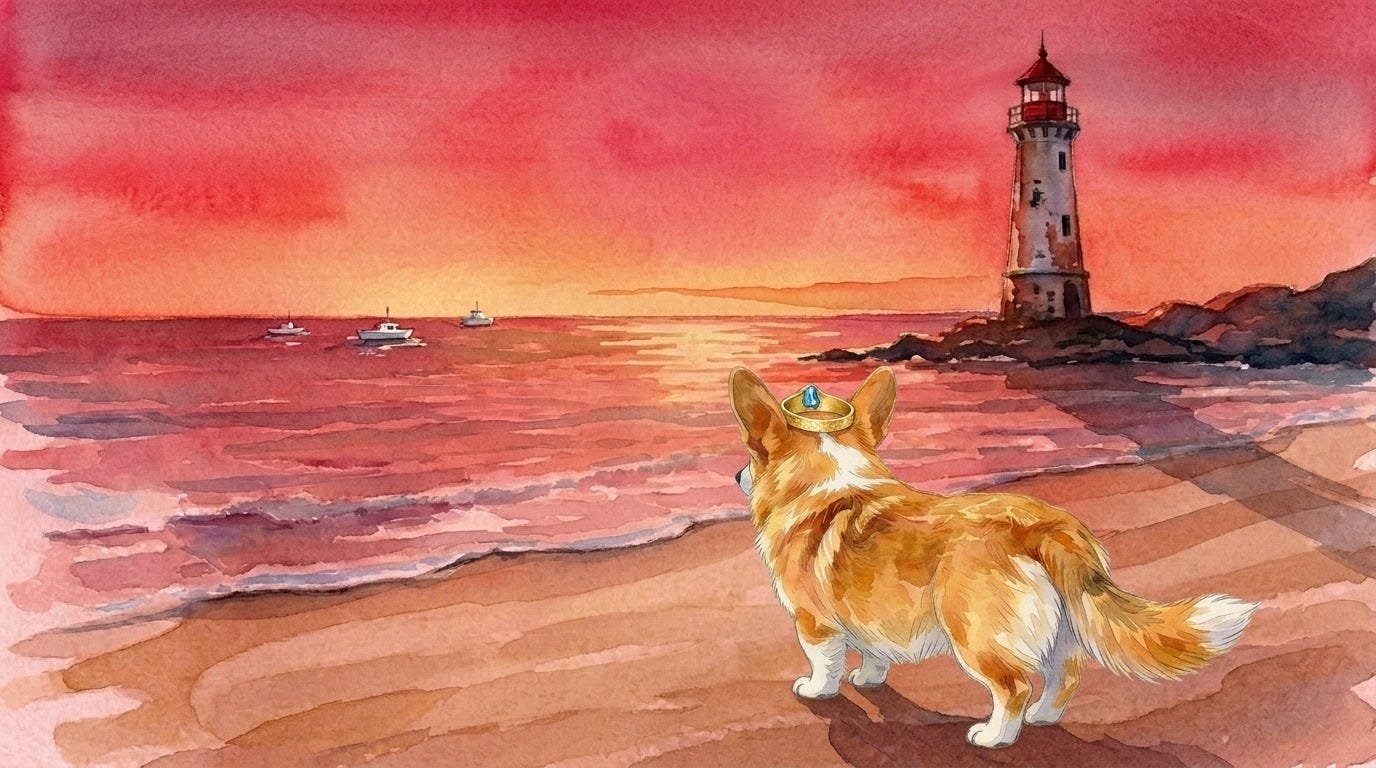
Then she was gone. The horizon held her colour for a moment, a thin warm line, and then that went too.
The stars came out. First one, to the left of the lighthouse, exactly where it always arrived. Then many. The moon appeared on the eastern horizon with an air of great patience finally rewarded, and rose without comment, casting the beach in silver.
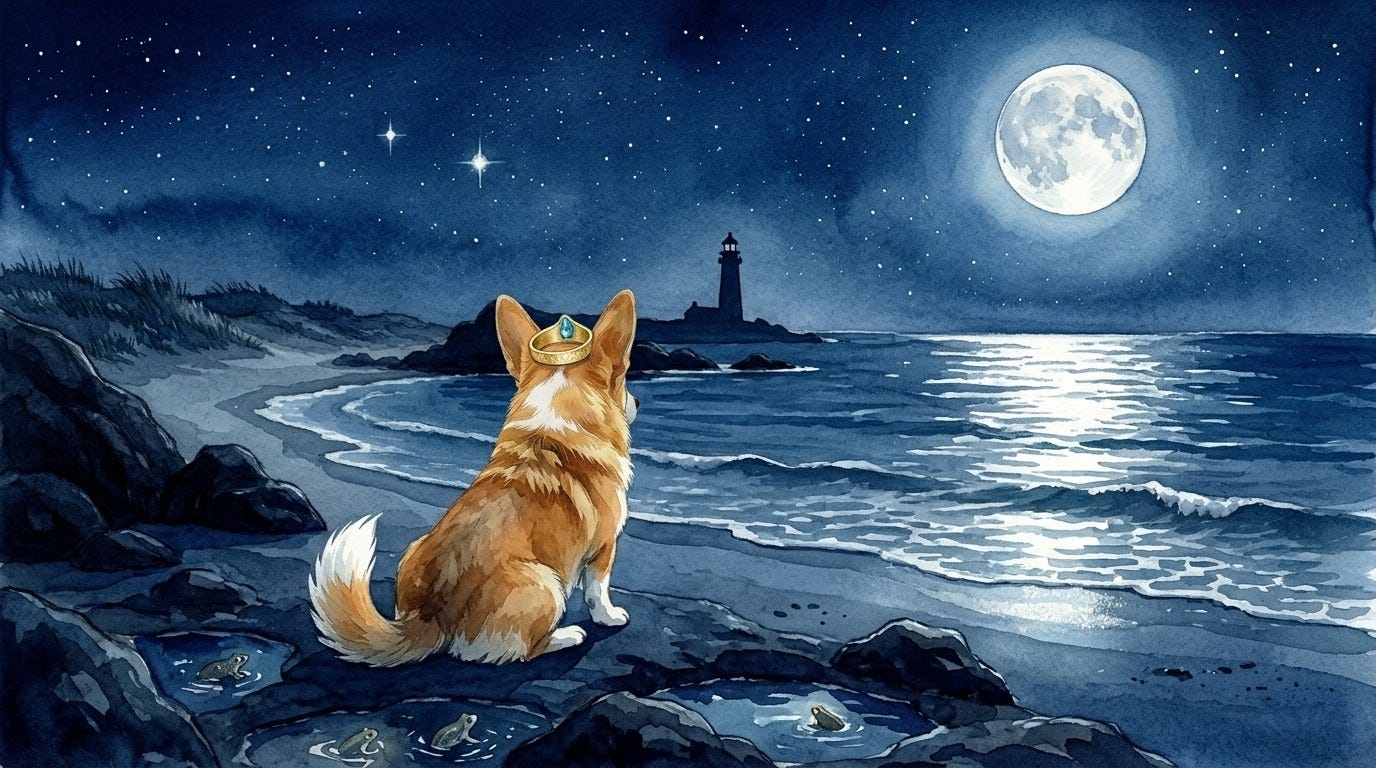
From the tide pools came small sounds. Movement in the water. The creatures arriving for their particular part of the evening, unhurried now that the light had got itself sorted.
Freddie walked home along the shore. The sand was cool under his paws. It was the proper temperature for this hour. The air carried the wild rosemary that grew above the tide line. The village was lit in its usual evening way. The café was shuttered. A few windows were warm and yellow. In the botanical garden above the beach, the turtle pond was quiet and still. The passionfruit vine hung above it.
The cottage was at the end of the path. His human had left the small side lamp on. It cast a gold circle on the ceiling of the porch. Inside, Freddie ate his supper in the companionable dark of the kitchen. The window showed a sky that was now exactly the right depth of blue-black. His human came through, carrying tea, and settled into the armchair with a book.
Freddie’s crown tilted gently as he looked at them. Then he went to the bed. His human was already settled, a book closed on the covers beside them.
Freddie circled once, twice, three times. On the third circle he sat down squarely. His small legs folded beneath him, front then back. He lowered his chin until it found the cool covers. His tail curved around his side. The taste of salt air lingered on his fur.
The moon moved across the window. Above the harbour, the first star held its place.
The End
Sleep well, Prince Freddie. In the tide pools, the small creatures are coming out now. They know what it means when darkness finally arrives.
The long, slow telling of this story lives in The Settle, the Companion feed, built to be slept through rather than listened to: https://stories.princefreddie.com/subscribe. This version stays free, always.
The Settle is this same story, told slower, longer, made for falling asleep to rather than following.
One subscription. No streaks, no ads, no catch. Press play, and let the day settle.
Such a gentle, imaginative story. I especially loved the reminder that even beautiful things must sometimes make room for what comes next.
I love how the stars have their places arranged already. Such a gentle way to come back to present moment and enjoy the details 🥰