

This story is the Season 1 Finale. Thank you for coming along to his adventures.
You can find the full season on
and his
hit “Follow” so the new stories find you on their own.
The tide brought things in.
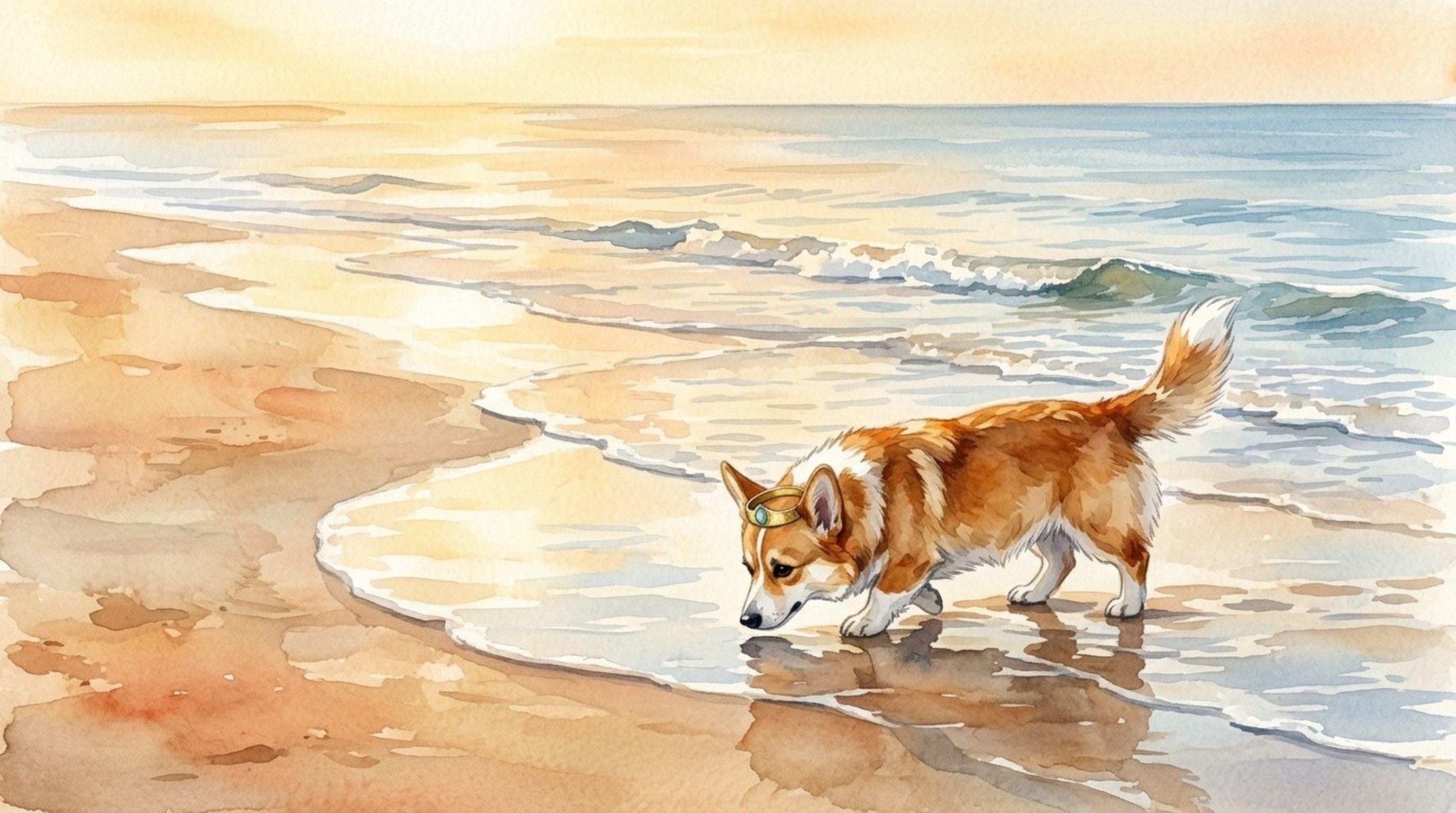
Prince Freddie knew this, had always known it. He patrolled the beach every morning and had catalogued what the sea delivered: bottle caps, corks, rope ends, a sandal. Once an extremely confused crab from a different part of the coast. Most of it he left where he found it. Some of it he sniffed carefully and moved on from. Now and then something made him stop.
This morning the tide had brought in a small piece of driftwood, pale and smooth from long travel, no larger than his paw. Someone had carved into it, once, a long time ago. He could still make it out: a simple shape, worn but clear. A small crown.
Freddie sat down beside it and looked at it for some time.
Then he picked it up carefully in his mouth, and took it to the fountain.
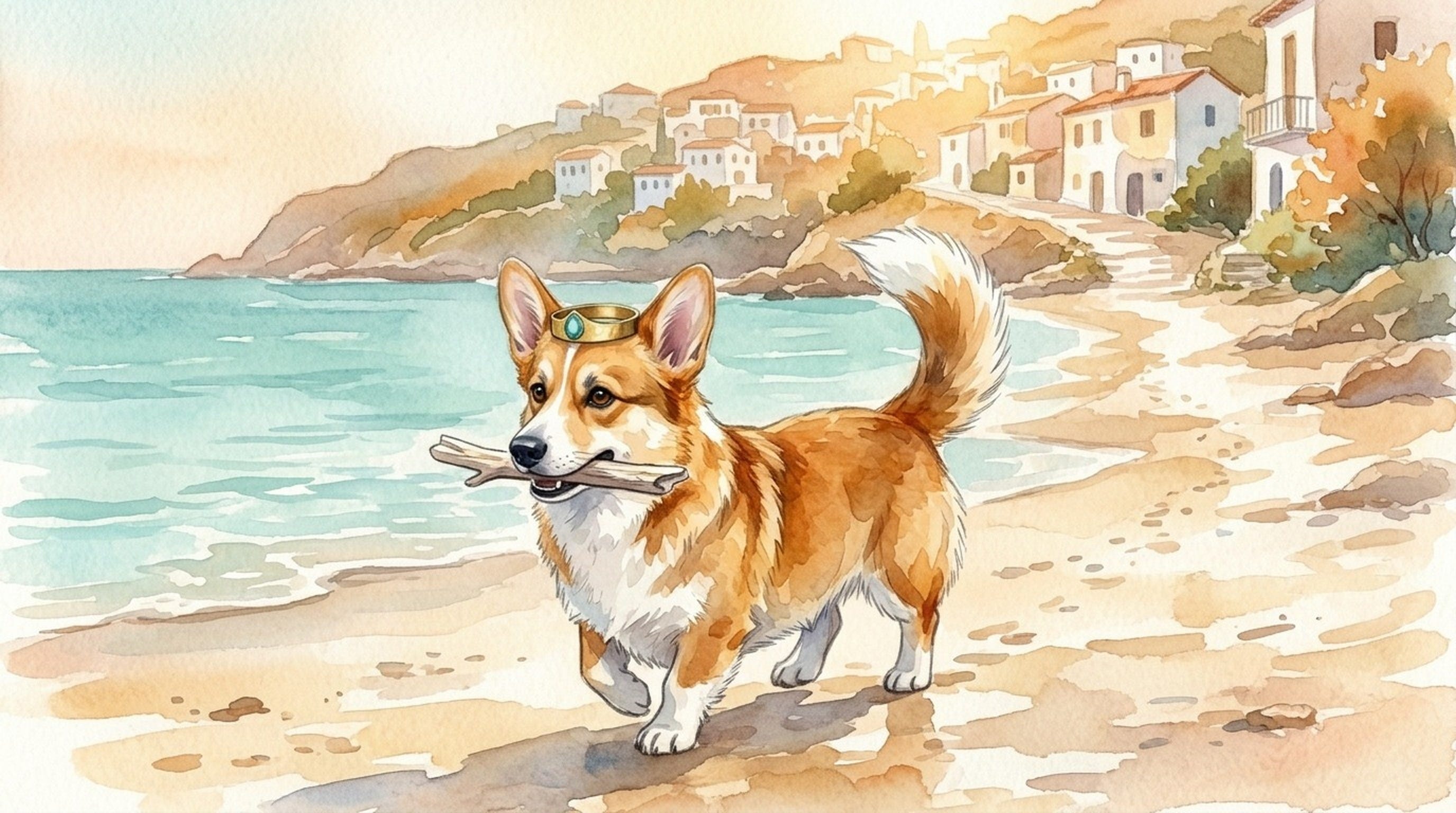
Marisol was where she always was, in the cool water under the lip of the stone basin, facing the square. She had been there four years and some months now, still counting the days. The limestone around her held five hundred years of memory in its particular warmth. She read it the way Freddie read a scent: continuously and without effort.
“I found something,” Freddie said, and set the driftwood at the fountain’s edge.
She came to look at it. Her smoke-grey fins went very still.
“Yes,” she said, after a moment. “The stone knows that shape.”
Freddie sat down. He knew how to listen.
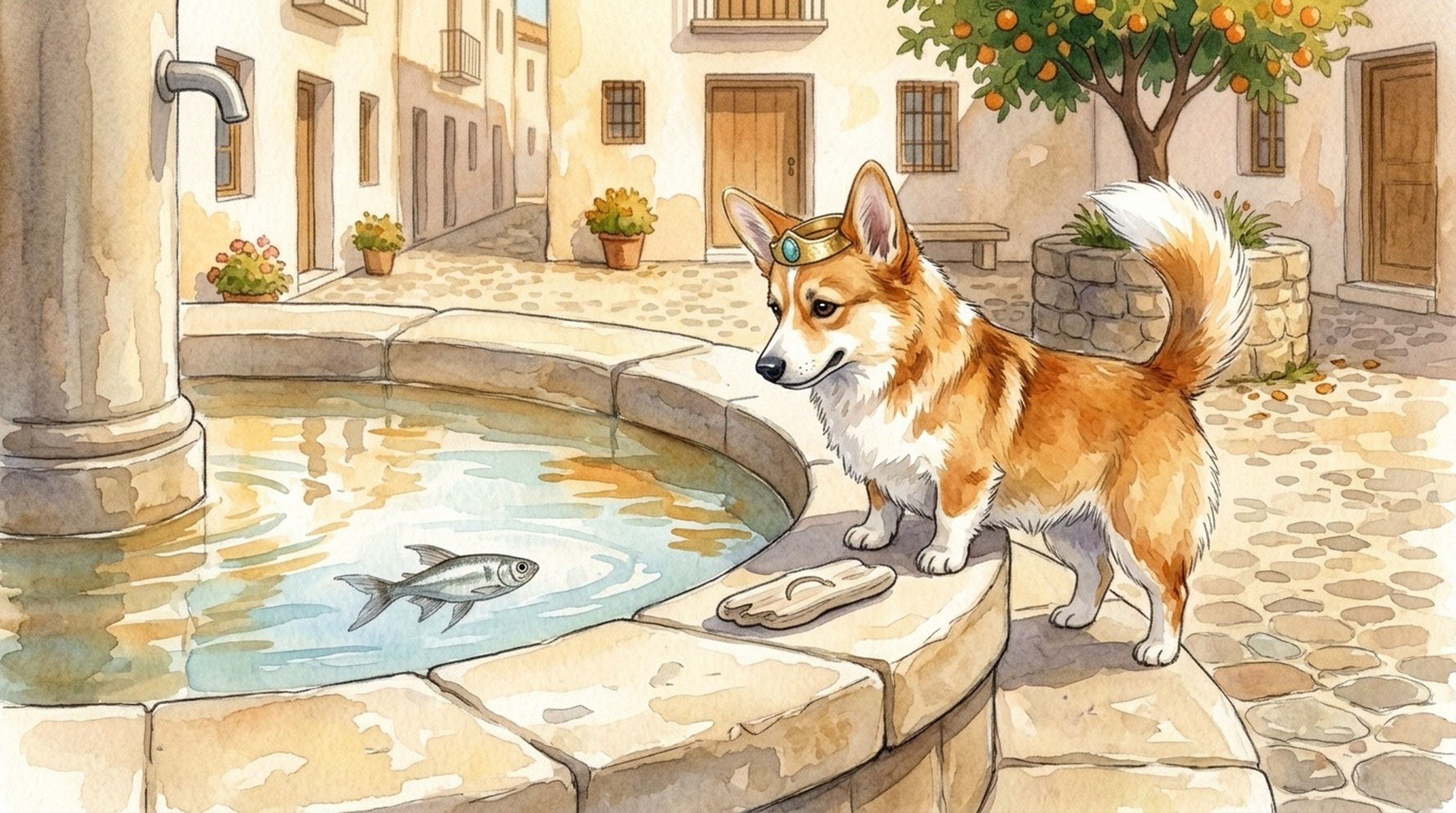
“The limestone holds everything this square has seen,” Marisol said. “Faces, seasons, the particular way the light moves at different hours. Certain shapes it holds more warmly than others.” She looked at the carving, then at the crown on Freddie’s head. “That shape is one of them. I told you once that the stone knew you were coming. What I meant was: the fountain was already waiting. The stone knew the shape of the crown before it knew the shape of you. And then you arrived, and it knew both.”
Freddie’s ears moved forward.
“Where did it come from?” he said.
“I don’t know,” Marisol said, which was an unusual answer from her. “The limestone doesn’t hold that. Some things come from further back than five hundred years. The sea knows. The shore doesn’t need to.”
Freddie looked at the crown’s reflection in the water of the fountain basin. The surface was still and dark. The crown appeared in it, catching the afternoon light a moment before anything else in the image did. He had seen that before, but he had not stopped to look at it properly. He stopped now.
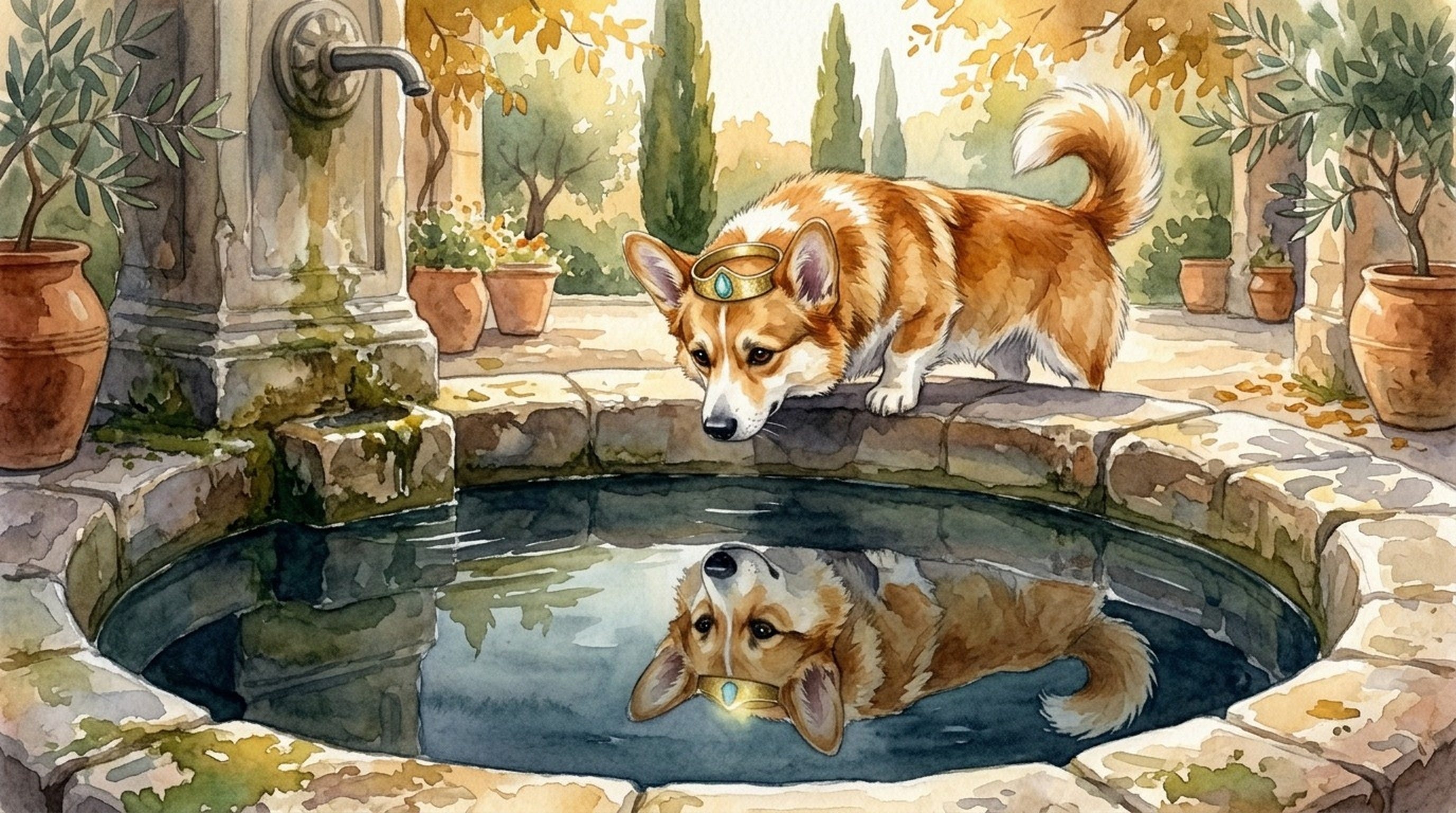
The band was a wide circlet of antique gold, sitting level between his ears. Its whole surface was hammered, beaten into countless small dimples. It held no single shine, but a hundred tiny ones that shifted as the water moved. At the front it rose gently to a single smooth dome, centred. It had the shape of a wave in the moment before it turns: gathered, round-backed, in no hurry at all. No craftsman’s pattern ran along it. It looked like something the sea had worked, not something a hand had made.
At the centre of the front, set proud in a low collar of gold, sat a single stone. It rode at the top of that small gold wave, carried the way the sea carries a thing it has decided to keep. It was not a cut gem. It was sea glass, its corners rounded, its surface gone soft and frosted, the way the tide works it over a very long time. Its colour was that of Mediterranean water in the shallow places where the sand shows through. Not blue, not green, but the specific thing between them that has no better name.
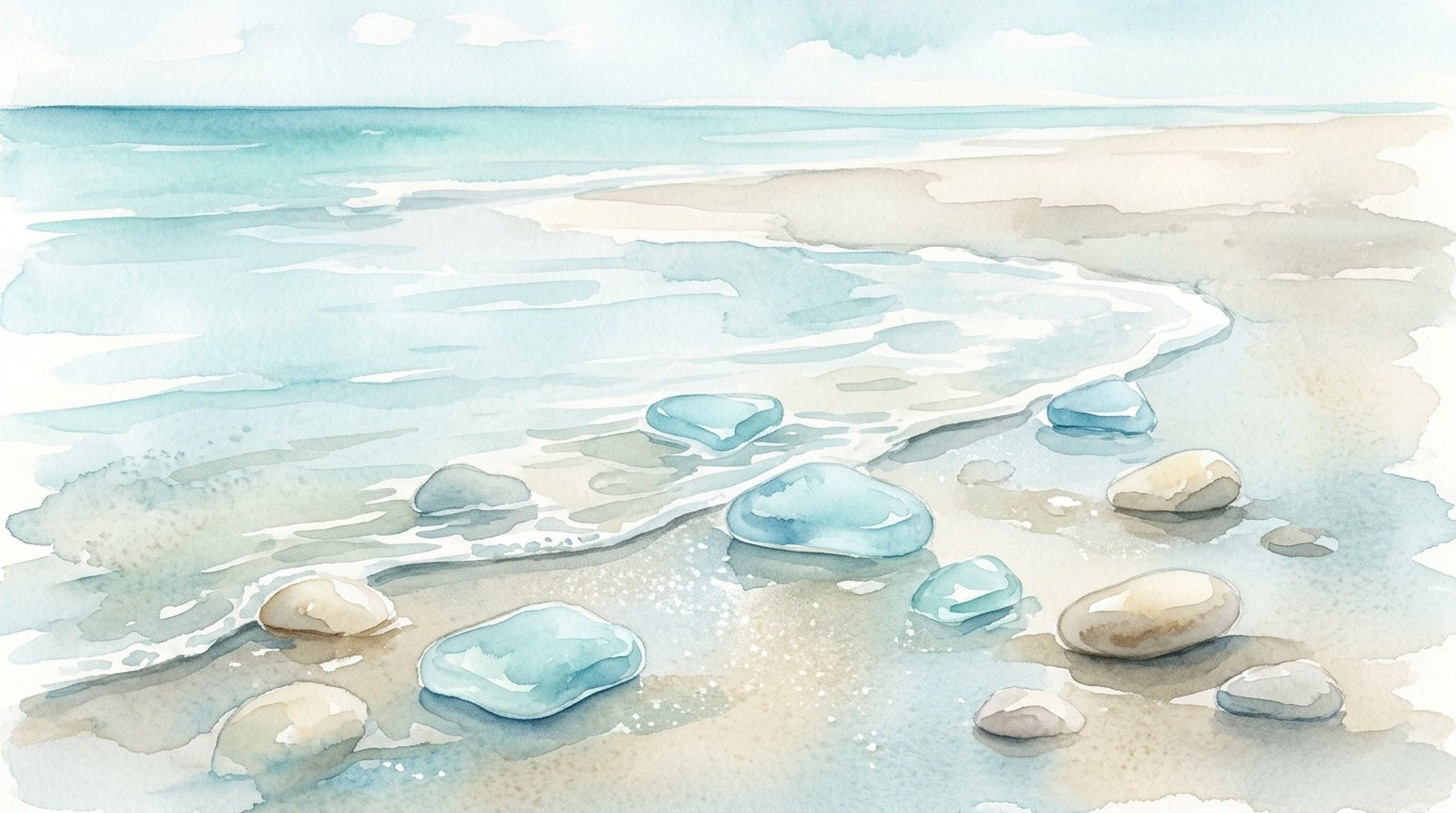
He wondered, without needing the answer, what it had been before the sea had it. Something shaped to hold and pour. A bottle of oil from a boat. A little jar of scent. A cup set on a sill in a house that looked out at this same water. The coast had been making and breaking glass since long before the village, since the first traders came to this shore. Whatever the piece had been, it had once had an edge, sharp enough to cut.
It had never once felt heavy. He understood now, looking at it in the dark water, why that was. There was nothing forced in it. Nothing mined, nothing forged, nothing done in a hurry. Only what the sea had kept a long time and worn gentle: the gold gone soft, the old sharp edges smoothed away. It was a thing made of patience, the way the tide shapes everything.
And then, quietly, the way a thing arrives when you have stopped reaching for it, he understood the rest.
The sea had made it. Not a craftsman at a bench. Not a king. Nobody at all. The Mediterranean had gathered what it had, gold gone down off old ships, a piece of glass from some vessel broken a very long time ago, and worked them the only way it works anything. Slowly. Without hurry. Until they became this.
He thought about the morning he had found it. Early patrol, the beach at a particular low tide hour when it was still his alone. A glint in the sand near the water’s edge. He had nosed it, picked it up, turned it over. Put it on. It had settled level between his ears at once, the fit exact, as though it had been waiting for him. He had walked home wearing it. His human looked up and considered him. They gave a small nod and smiled. That had been the end of the matter.
He had never said why. He understood it now.
The crown had not washed up by accident. The sea had chosen the morning. It had chosen the tide, and the hour, and the small dog who would be walking there. The sea does not know breeds, or names, or which creatures are supposed to matter. It knows what a heart is like. It had held the crown in itself a long time, waiting for a pure one to come along this stretch of coast. And on that low, quiet morning, it found him, and set the crown down in the sand where he would be sure to see it.
Nobody had given him a title. Nobody had needed to. The sea chose him, and the coast saw it, and after that everyone simply knew him as Prince Freddie.
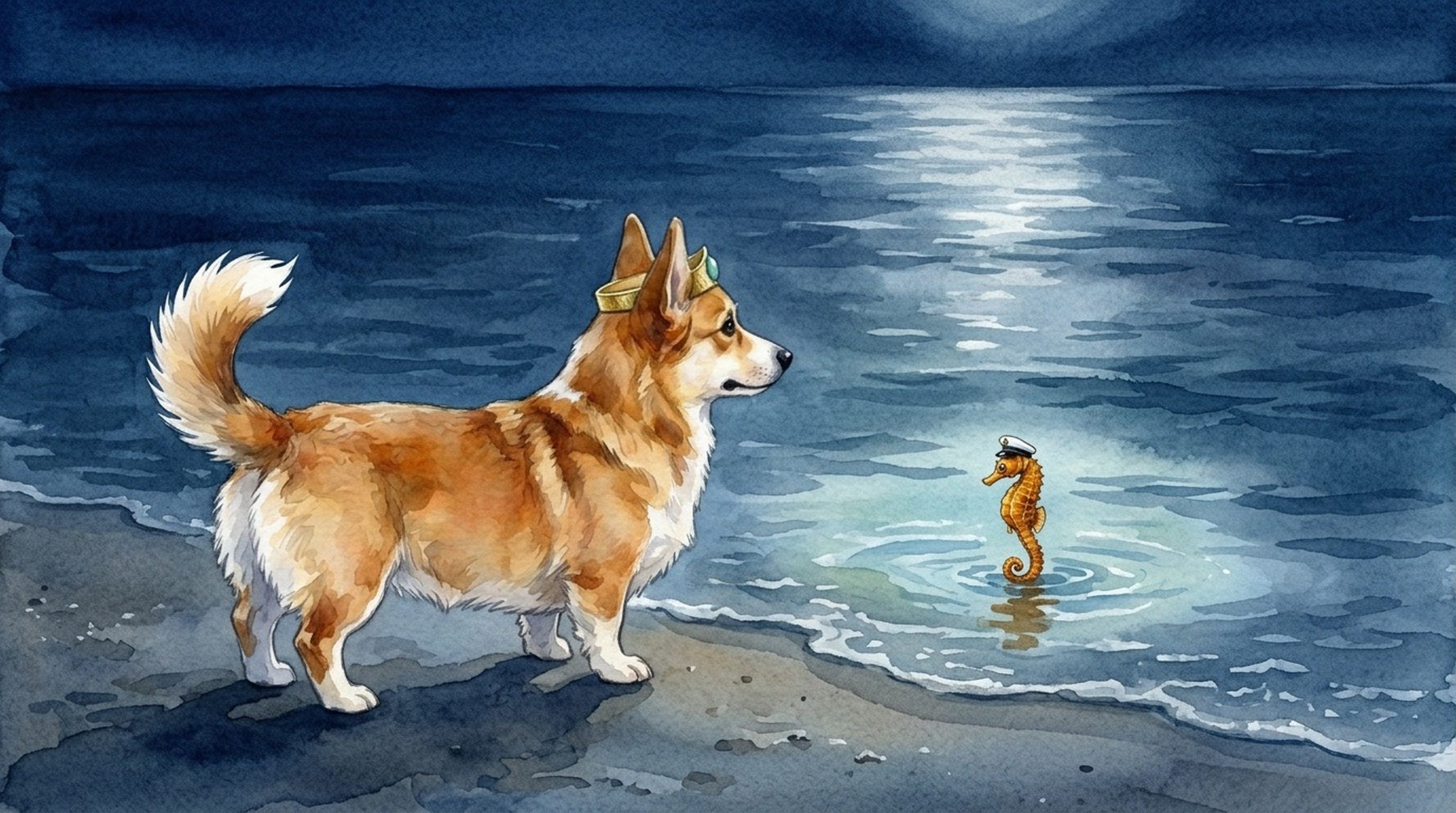
He thought about all the creatures who had known him by it. Captain Coral in the dark water had hailed him before they had spoken. The foam inspector who had checked his credentials and found the crown sufficient. The stars, who had addressed him as though they had expected him.
They had not been greeting him, exactly. They had been greeting what he carried, the way you nod to something you already know. The coast had not made him into anything. It had recognised what was already there, and let the tide carry him the sign of it.
“The stone was waiting,” Freddie said, not quite as a question.
“The coast was waiting,” Marisol said. “The stone simply kept the record.”
He picked up the piece of driftwood and considered it. Someone had made it carefully, once, and it had travelled a long way. He set it on the rim.
He walked home through the village as the evening came in off the sea. The streets were narrow and warm. The shutters were going closed, the smell of garlic from various windows. At the top of the beach path he stopped and looked down. The sand was gold in the last light. The tide drew back, the lighthouse beginning its sweep.
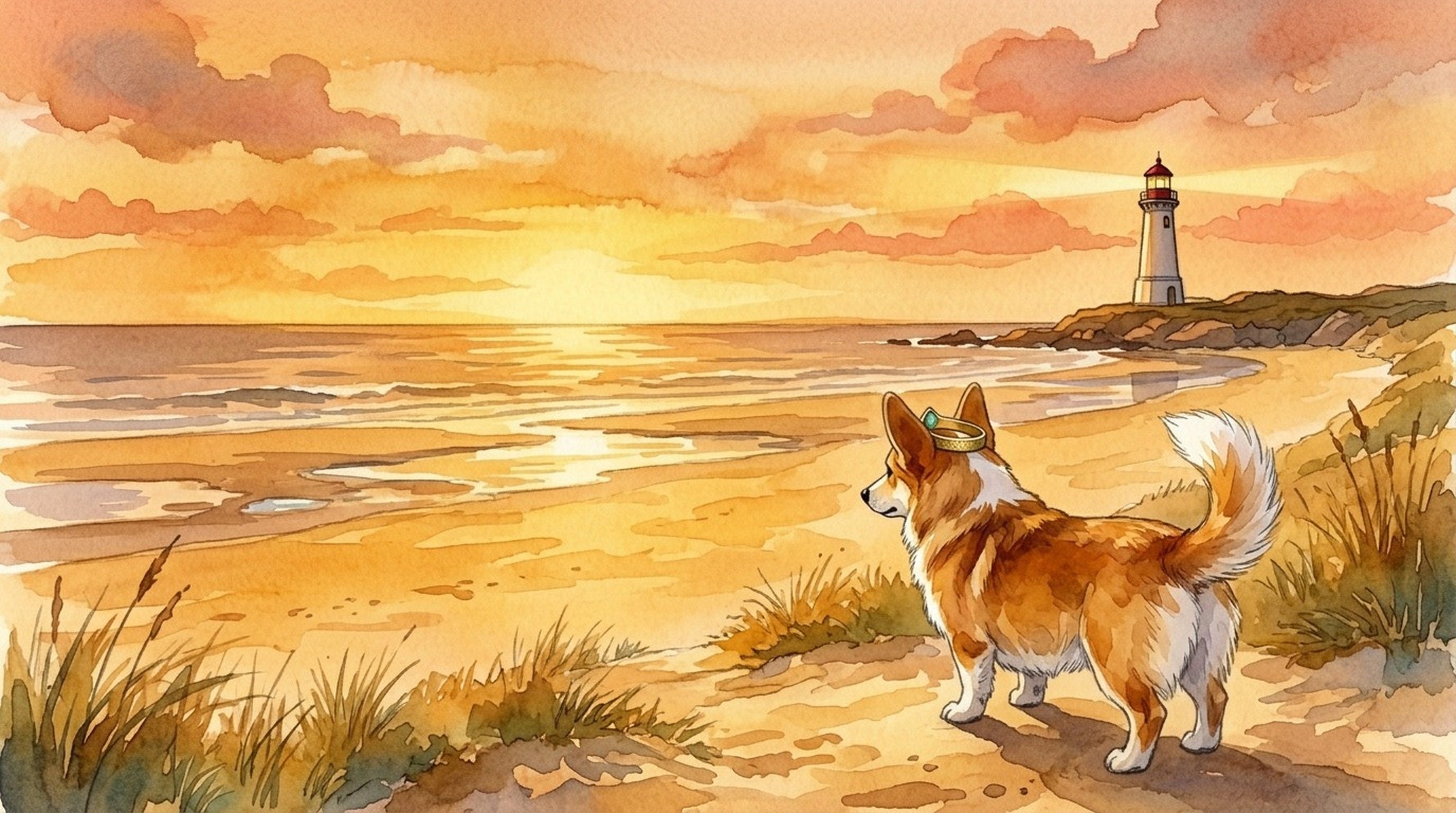
The crown sat level between his ears, as it always had. It was not heavy.
He went down the path to the cottage.
His human was in the garden with a cup of something warm. They looked up when he came through the gate, and smiled. Without reason, which was the best reason.
Freddie circled once, twice, three times. He lay down on the cool grass beside the garden chair. His chin rested on his front paws. A hand came down and ran along his back, shoulder to tail. His crown caught the last evening light.
The driftwood piece sat on the fountain rim in the village square. Small and pale. Worn smooth.
The End
Sleep well, Prince Freddie. On the fountain rim, the piece of driftwood is pale in the moonlight. Small and worn smooth.