

Before we begin: The Settle is this same story, told slower, longer, made for falling asleep to rather than following.
It is built for the nights your head will not stop talking, the same conversation on repeat, long after the room has gone quiet. $6.99 a month, or $59.99 a year.
One subscription. No streaks, no ads, no catch. Press play, and let the day settle.
Prince Freddie was walking along the harbour wall when he heard something unusual. Among the familiar sounds of waves and seagulls and boat ropes creaking, there was a rhythmic ticking. Not the kind from a watch. Something slower, deeper, with pauses that felt deliberate.

He followed the sound to a small shop tucked between two larger buildings. The sign above the door said Relojería in faded gold letters. A clock shop. Freddie had passed it countless times but had never seen it open. Today, the door stood slightly ajar.
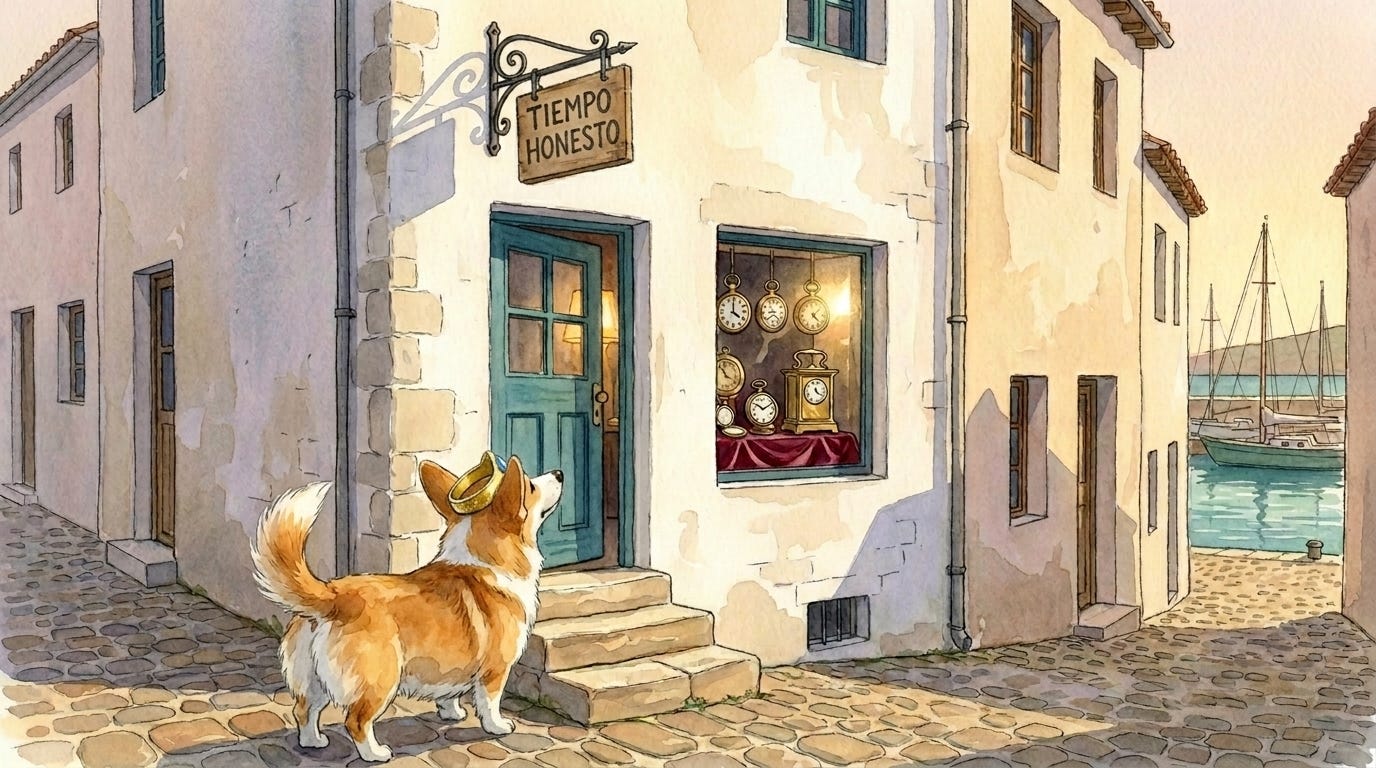
Inside, the ticking was everywhere. Dozens of clocks lined the walls, each one marking time in its own way. But something was wrong. None of them agreed. One said three o'clock. Another said half past nine. A third had stopped entirely at midnight, its hands frozen in a perfect vertical line.
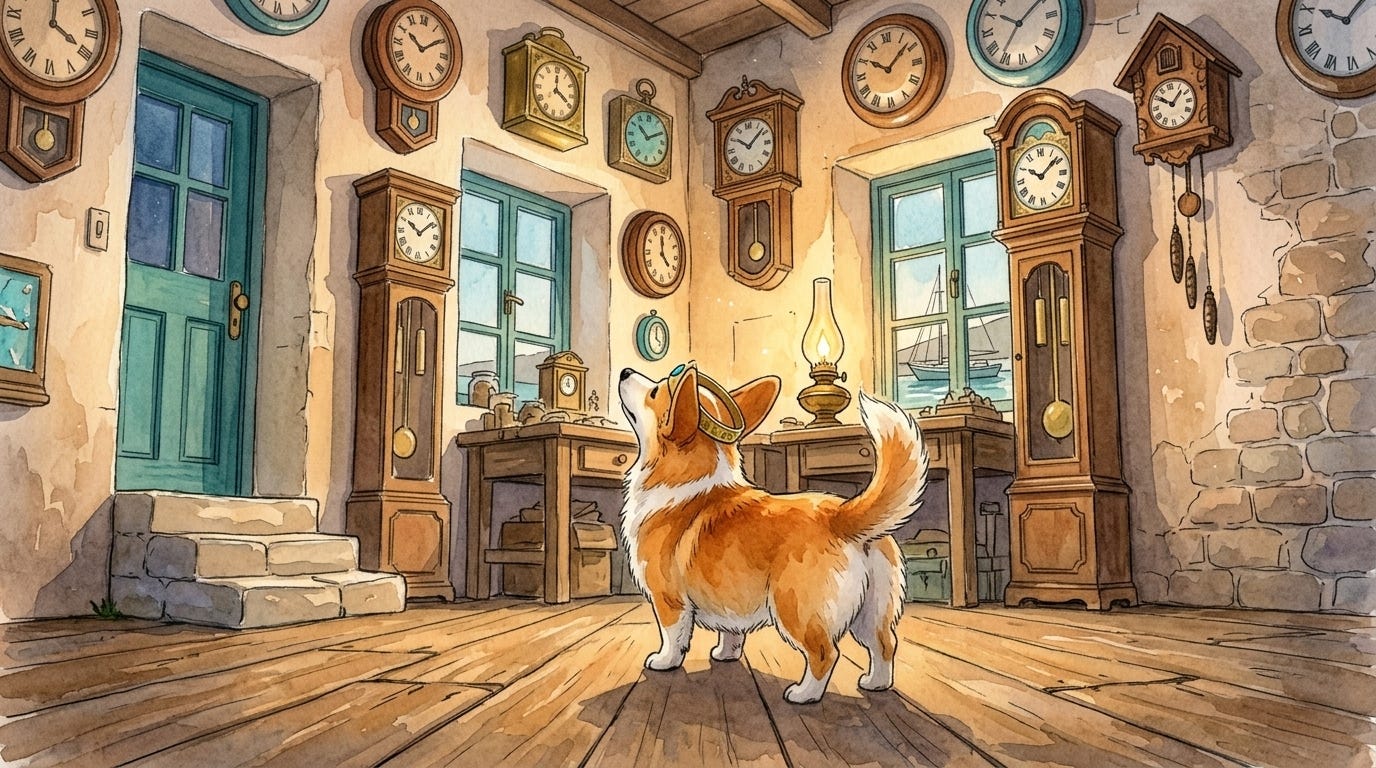
“Hello?” Freddie said softly.
“Back here,” came a voice from behind a curtain at the rear of the shop.
Freddie made his way through the narrow aisles. His short legs were careful not to bump the stacked clock parts. Behind the curtain, he found an elderly man at a workbench. A jeweller’s loupe was in one eye. He held a tiny gear up to the light.
“I’m Señor Tiempo,” the man said without looking up. “And before you ask, yes, I know my clocks are all wrong. I’ve forgotten how to fix them.”
Freddie sat down carefully beside the workbench. “You’ve forgotten? But you’re a clockmaker.”
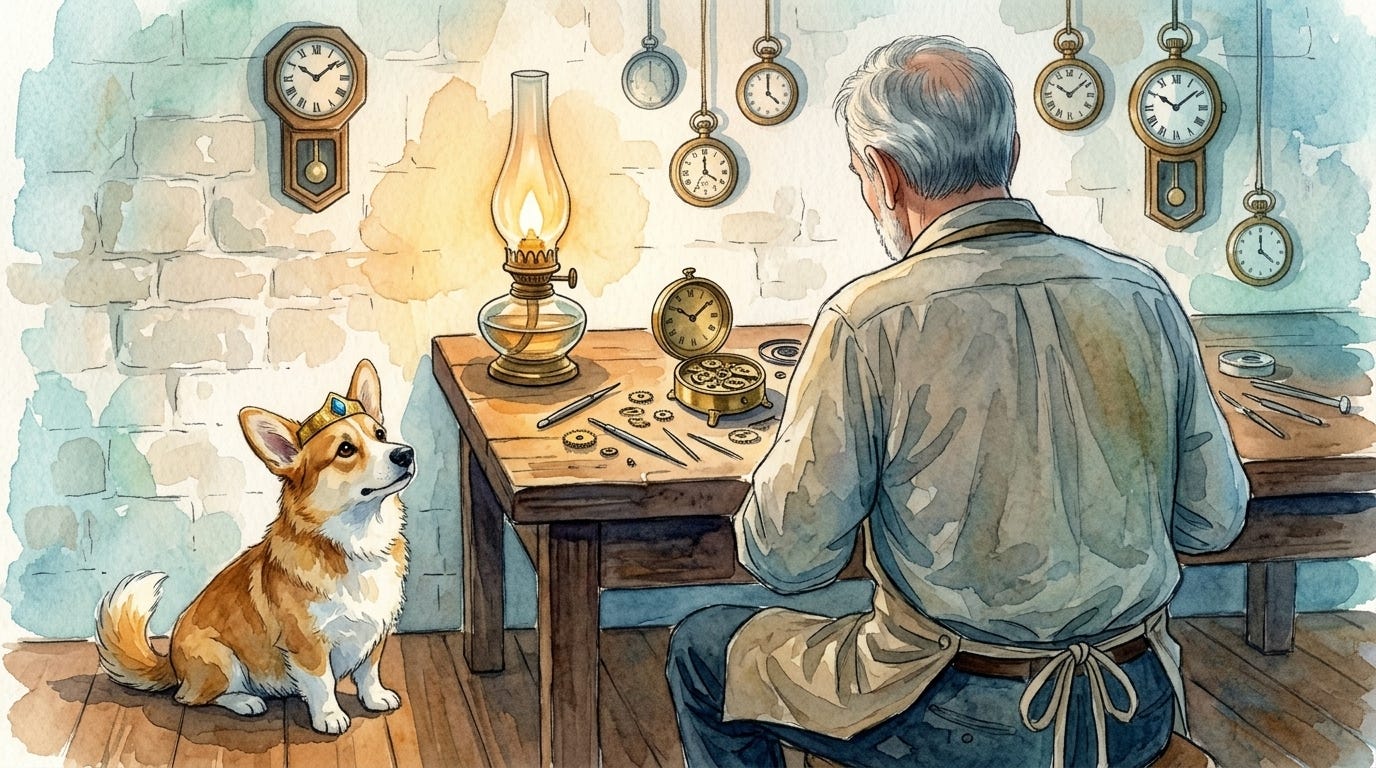
“I am,” Señor Tiempo agreed, setting down the gear. He removed the loupe and looked at Freddie properly for the first time. “Or I was. For sixty years, I understood time better than anyone on this coast. I could hear what a clock needed just by listening to it tick. But last month, something strange happened. I woke up one morning and time didn’t make sense anymore.”
“What do you mean?”
Señor Tiempo gestured at the shop around them. “Time is supposed to be constant, yes? One second follows another, always the same speed, always the same direction. But that’s not how it feels. Some moments stretch out forever. Others disappear before you notice them. Morning coffee with someone you love is different time. Waiting for dreaded news is different time. Both are an hour, but not the same.”
“So what happened to your clocks?” Freddie said.
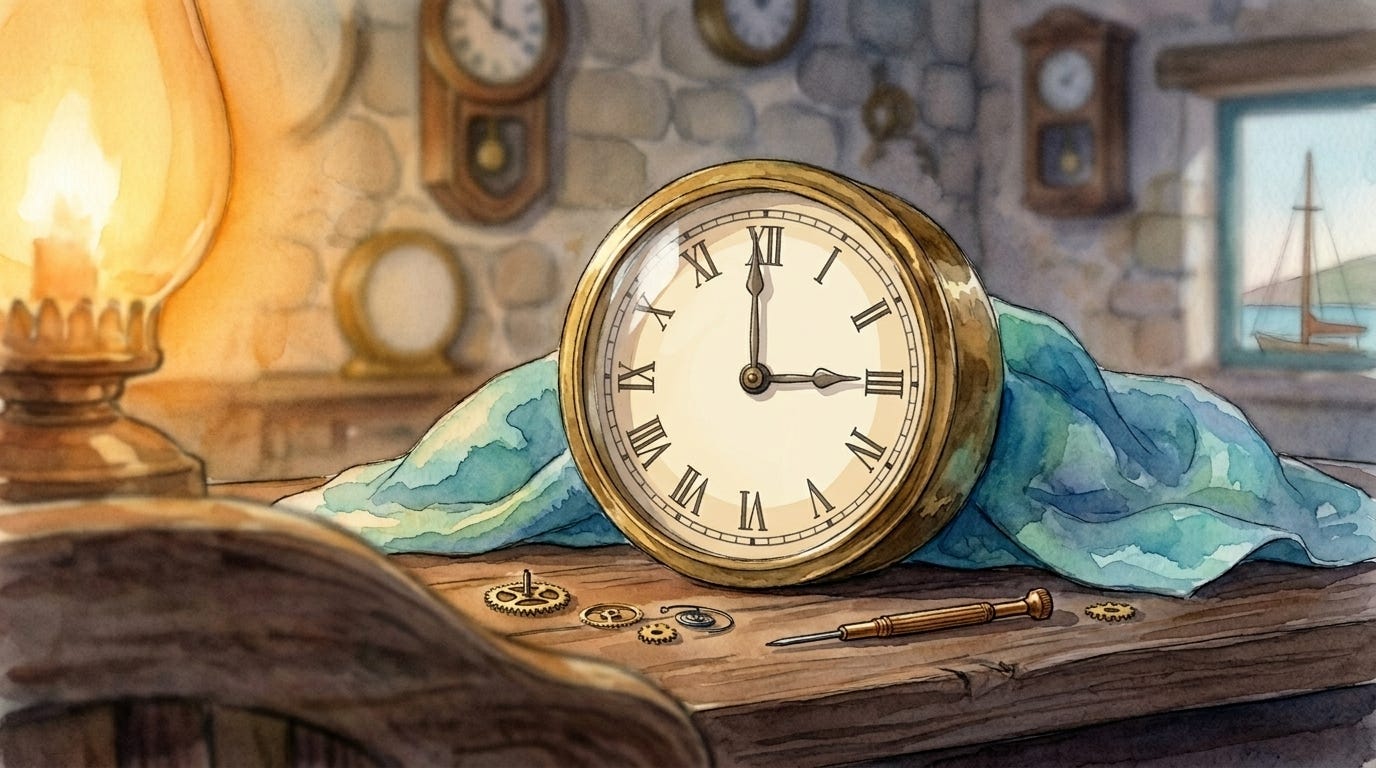
“They started telling the truth,” Señor Tiempo said simply. “This one here,” he pointed to a small brass clock on his workbench, “stops every day at three fifteen. For a long time I thought it was faulty.” He paused. “Then I remembered what three fifteen is.”
Freddie waited.
“Siesta,” Señor Tiempo said. “The whole harbour stops. The café closes. The boats tie up. The square empties, except for the cats.” He set down the gear he had been turning in his fingers. “For sixty years I have tried to make every clock in this shop run straight through three fifteen. Last month I stopped trying.”
Freddie’s tail gave one slow wag. “Because three fifteen is the best hour?”
“Because three fifteen is true,” Señor Tiempo said. He looked at Freddie steadily.
Freddie sat with this for a moment.
“It tells true time,” Freddie said. “That is different from correct time.”
Señor Tiempo looked at him with something between surprise and recognition. “Exactly so,” he said.
He reached out and wound the small brass clock carefully. His hands were very steady. The hands of someone who had spent sixty years touching small, precise things. He set it running again, knowing it would stop at three fifteen tomorrow, which was entirely correct.
Señor Tiempo walked to a grandfather clock in the corner. It ran slow on quiet days because quiet days felt longer. He opened its glass face and set the pendulum swinging. He showed Freddie a smaller clock. It chimed when something beautiful happened. It chimed at sunset every day.
Three clocks, each telling a different truth.
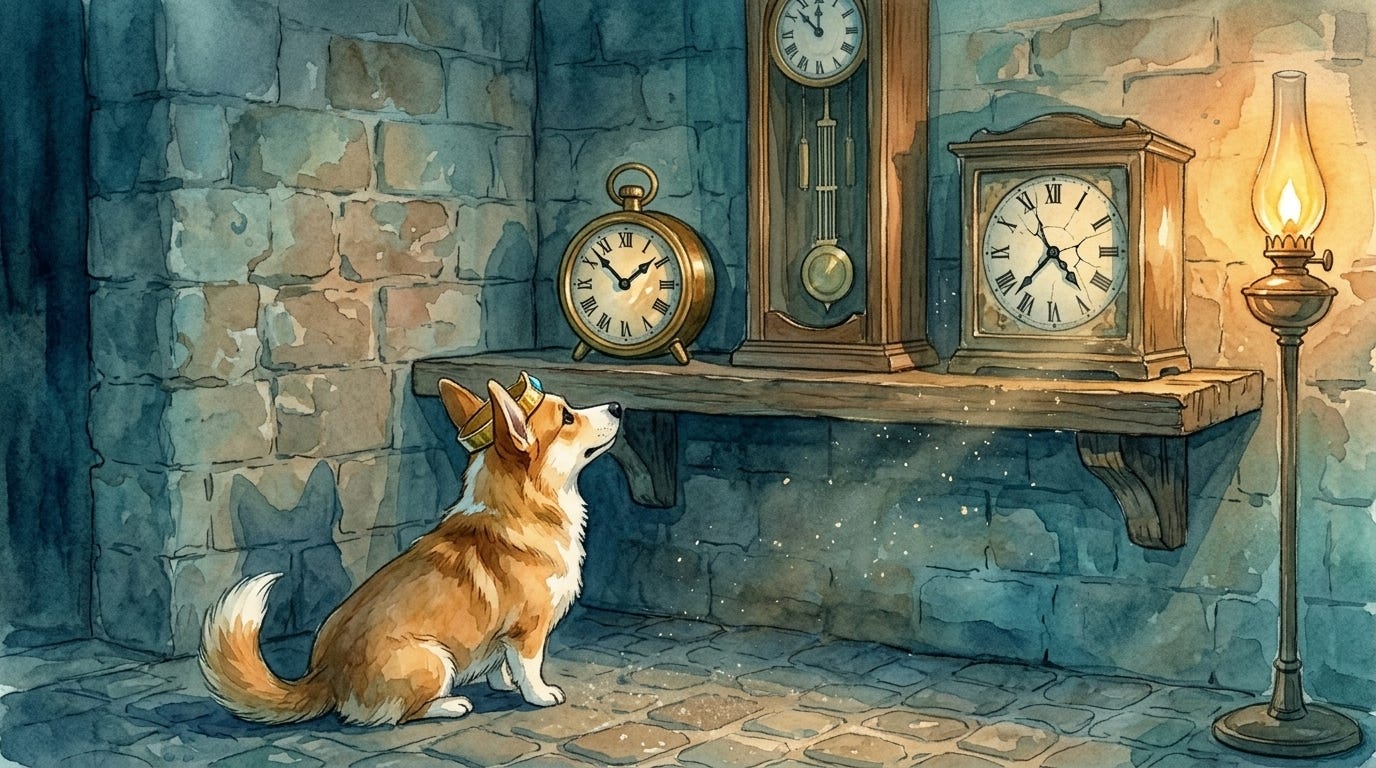
“You haven’t forgotten how to be a clockmaker,” Freddie said. “You’ve learned to make different kinds.”
Señor Tiempo looked around his shop, seeing it differently now. “I’ll need a new sign.”
“What will you call it?”
The old man smiled for the first time since Freddie had arrived. “Tiempo Honesto. Honest Time.”
Freddie walked home as evening settled. He came through the village square. He stopped at the old stone fountain. The light was fading. The air was warm. The water in the basin was still. He thought about the brass clock. The one that stopped at three fifteen every day.
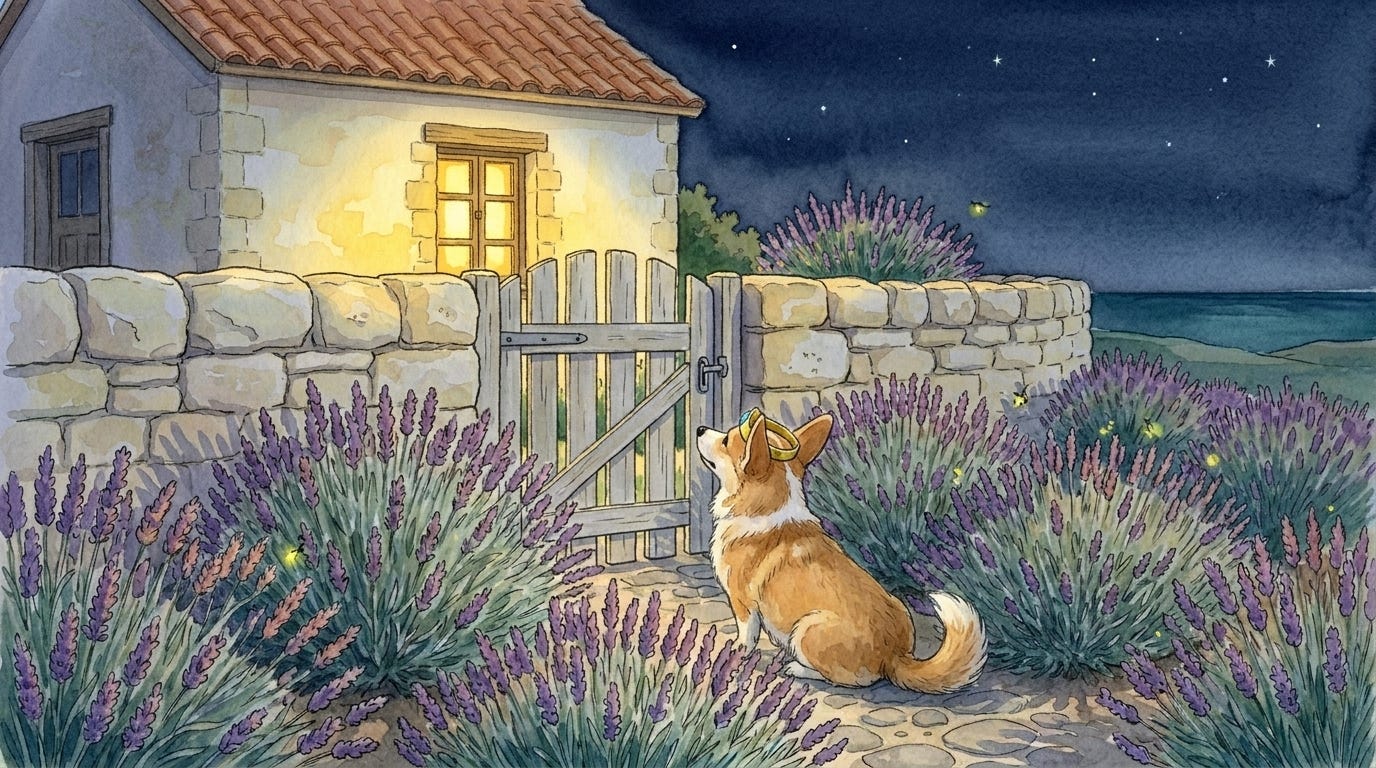
The cottage came into view at the end of the path. The lamp was already lit in the window.
Freddie stood at the gate for a moment. The sunset clock in the harbour shop would be chiming right now. He couldn’t hear it from here, but he felt it. The air still held the shape of the sound.
His human had made something with garlic and tomatoes. The smell reached to the door. After dinner, Freddie hopped onto the bed. His legs were pleasantly tired. His human was already there.
He circled once, twice, three times. Then he lay down on his side. He was still. His tail rested where it fell. His human’s hand moved along his back. Slow and sure. His breathing was already slowing.
Somewhere in the harbour, a shop called Tiempo Honesto held three clocks. A small brass clock ticked toward three fifteen. The grandfather clock swung its slow, unhurried pendulum. The sunset clock had chimed softly as the last light left.
The End
Rest well, Prince Freddie. Time moves however it needs to tonight.
The Settle is this same story, told slower, longer, made for falling asleep to rather than following.
One subscription. No streaks, no ads, no catch. Press play, and let the day settle.
“Siesta,” Señor Tiempo said. “The whole harbour stops. The café closes. The boats tie up. The square empties, except for the cats.”
There is something tragic about the image of a clockmaker, master of gears, steward of seconds, architect of precision slowly losing his own relationship with time. It feels painfully familiar. Because if we’re honest, most of us are living some version of this story. We have become highly sophisticated managers of our lives while often forgetting how to actually live them. Which is what makes this piece so charming. Well done, Prince Freddie.